◎ Style Change:
◎ This post was translated from Japanese with translation software.
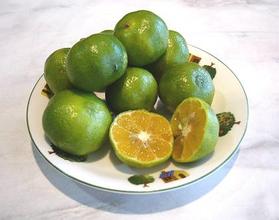 This variety of mikan is the first to be harvested among the Onshu mikans. The very first variety of mikan harvested a little earlier than the normal harvest time is called "aokiri mikan". The skin is green but fragrant, and the fruit is red and sweet. Aokiri mikan is characterized by the fresh acidity of Onshu mikan and is mainly produced in Okinawa, Kagoshima, and Wakayama. (Deepl)
Wenzhou mandarins are a variety of mandarin oranges, and among them, the earliest harvested variety is called "Gokuwase."
Mandarins of this early-harvest Gokuwase variety, picked a little earlier than the usual harvest time, are known as "Aogiri Mikan" or green-peel mandarins. Despite their green peel, they have a strong fragrance, and the fruit is characterized by its red color and sweetness. Aogiri Mikan is known for the refreshing acidity typical of Wenzhou mandarins and is primarily produced in Okinawa, Kagoshima, and Wakayama. (ChatGPT)
The first variety of mandarin oranges to be harvested is the early-ripe variety. The early-ripe variety that is harvested a little earlier than the usual harvest time is called a green-cut mandarin orange. It is characterized by its strong fragrance even with a green skin, and its sweet red fruit. Green-cut mandarin oranges are characterized by the refreshing acidity of mandarin oranges, and Okinawa, Kagoshima, and Wakayama are the main production areas.(Google Bard)


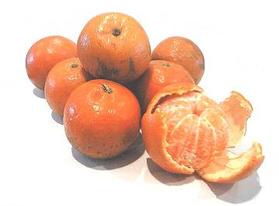 Tankan, a popular citrus fruit in Okinawa. It is a subtropical citrus fruit that prefers high temperatures, and the harvest season is from January to late April. Tankan, which peaks in February, is a winter fruit in the subtropics where there is no snow.
Tankan is characterized by its thick and bumpy skin, with uneven color and black spots mixed in. Due to its thick skin, it can be a bit challenging to peel, but the flesh is orange, soft, and juicy. It is said to have a rich flavor with less acidity than it appears, leaving a lingering sweetness. The photo shows the Tankan I received, and although the season is coming to an end, it is still sufficiently sweet.
Tankan is believed to have originated in Guangdong Province, China, and it was introduced to the Ryukyu Islands, including Okinawa and Amami Oshima, via Taiwan in the late Meiji period. It is said that full-scale cultivation began around 1934 in the Showa era.
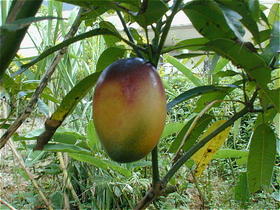 Mangifera indica, commonly known as mango, is a species of flowering plant in the family Anacardiaceae. It is a large fruit tree, capable of growing to a height of 30 metres (100 feet). There are two distinct genetic populations in modern mangoes – the "Indian type" and the "Southeast Asian type". ー Wikipedia ー
It is common to cut the ripe fruit along the seed and consume it raw, but it is also processed into juice, lassi, puree, canned, and dried fruits. In Hong Kong, mango pudding, which combines the pulp or puree with ingredients like gelatin, sugar, and cream, is famous. In addition, Western confectioneries such as mousse, cake, sherbet, smoothies, and gummies are also popularly made. Additionally, unripe fruits are pickled in salt, sweet and sour pickles, or chutney. In Southeast Asia, unripe fruits are soaked in chili-infused sugar salt and consumed, or used in dishes like stir-fries.
In terms of nutrition, mangoes are particularly rich in carotenes, and contain a lot of Vitamin A and Vitamin C, with expected antioxidant effects. They also contain folic acid, which helps prevent anemia and mouth sores.
Mangoes contain a substance called 'mangiferin,' similar to urushiol, which can cause contact dermatitis (itchiness). It is important to be cautious, as it can lead to a high incidence of rashes. Symptoms of rash, including itching and eczema, may develop and worsen several days after consumption and can sometimes be misdiagnosed as herpes or similar conditions. - From Wikipedia -

The top mango-producing prefecture in Japan is Okinawa, known for its subtropical climate ideal for growing mangoes. The main cultivated varieties are Apple Mango (Irwin variety) and Keitt Mango. Apple Mango is primarily shipped from late June to early August, with a sugar content of around 15 degrees and a distinctive red appearance.
Keitt Mango is characterized by its green skin remaining even when fully ripe. It is low in fiber and sweet. The harvest period is later than that of Apple Mango, with shipments typically occurring from August to October.
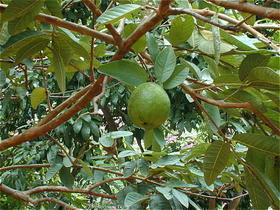 The fruit is collected all year round in Okinawa, but the heaviest harvest is from August to September. Guavas seem to grow best in well-drained, mildly acidic soil, but many households grow them as garden plants, as they are basically soil-independent and vigorous plants.
The fruits are edible. They are spherical or pear-shaped, 3-10 cm in diameter. The skin is thin and fine-textured, with a colour ranging from light green to yellow, turning pink or red at maturity, depending on the variety. The white or orange flesh contains many small, hard seeds. Note that the seeds can cause belching if consumed in large quantities. The scent of banshiru is a mixed bag, but I like its oriental sweetness.
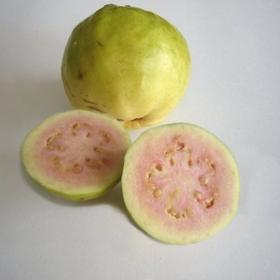
Guava is best known for guava juice made by squeezing its fruit. It is the guava leaves that are the focus of attention, and guava tea made from the dried leaves has long been enjoyed in Okinawa as an effective tea for diabetes, diarrhoea, toothache, mouth ulcers and stomach ulcers.
Guava is cultivated for food in tropical countries and includes varieties such as Strawberry, Costa Rica, Apple, Guinea, Cutley and Mountain. The fruit is often consumed as is or squeezed to make guava juice, which is well known. - From Wikipedia Encyclopaedia. -
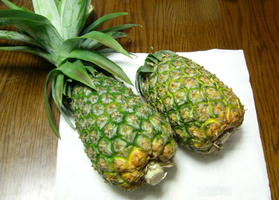 The pineapple (Pineapple, Pineapple, Ananas comosus) is a perennial plant of the pineapple family, or its enlarged fruit, native to tropical America. It is sometimes referred to simply as pineapple, and its Chinese name is pineapple (菠蘿), pineapple (菠蘿) or pineapple (鳳梨) (Houli, Onlai, Fongli). In mainland China and Hong Kong, it is called pineapple (菠蘿), while in Taiwan it is called fengli (鳳梨). The botanical name is also sometimes used to refer to the plant as Ananas, and only the fruit or edible parts are sometimes referred to as pineapple to distinguish it from other species. The name pineapple originally referred to the pine fruit (apple), or pine cone. Around the 18th century, the name was changed to the fruit of this species, which has a similar appearance. Production is increasing, mostly from Costa Rica, the Philippines and Brazil, and the fruit has a sweet flavour and lots of juice.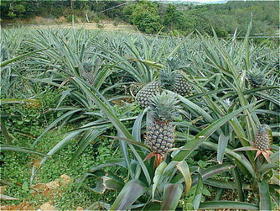
The leaves grow in clusters from underground stems and are sword-shaped and stiff, with or without thorns on the edges. Seedlings are propagated from suckers with well-developed axillary buds at the base of the leaves.
12-18 months after planting, spikelets emerge from the centre of the plant, with a 60 cm to as long as 100 cm flower shaft with a cylindrical inflorescence at the tip, containing about 150 flowers. The flowers are arranged in a spiral pattern on the inflorescence, with three outer petals and three inner petals, typical of a monocotyledonous plant. The petals are fleshy, white in colour with a light purple tip. Fruiting occurs in about 6 months after flowering, with or without pollination. After fruiting, the true fruit, which is derived from the cotyledon, fuses with the saucer at the base of each individual flower and even the inflorescence axis to form an enlarged, so-called 'pineapple'. The true fruit is the hard, spirally arranged part of the fruit surface, and when the fruit part is peeled off like a skin, brown seeds the size of sesame seeds may be seen between the pulp and the fruit. [From Wikipedia.]


 Mail
Mail