◎ Style Change:
◎ This post was translated from Japanese with translation software.
Shima rakkyo
2025.10.05
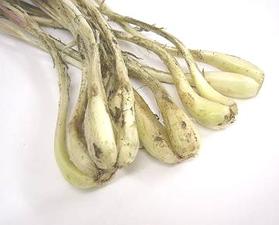 In the Okinawan dialect, *rakkyo* (Japanese shallots) are traditionally called “datchou”, though this term is mostly used by the older generation. Today, the more common name is“shima-rakkyo” or island shallots. Compared to the rakkyo grown on the mainland, Okinawa’s variety is smaller and more slender. Because shima-rakkyo is delicious when eaten raw, one might be tempted to give it a Western-style name like “shima-esharette”.
According to Wikipedia, the term “esharette” was coined by a produce wholesaler in Tokyo’s Tsukiji market to describe young, early-harvested rakkyo. The wholesaler explained, “I didn’t think ‘root-rakkyo’ would sell well, so I gave it a stylish name instead.”
Of course, this blog has no intention of confusing shima-rakkyo with esharette. On the contrary, I hope to promote the unique name shima-rakkyo more widely. It’s enjoyed in various forms—pickled in salt or vinegar, stir-fried in chanpuru, or deep-fried as tempura.
To enjoy shima-rakkyo at its best, lightly rub it with salt and let it rest overnight. Then sprinkle it with shaved bonito flakes and a dash of soy sauce for a refreshing salad-like dish. Its fragrant aroma and sharp flavor pair perfectly not only with tea but also with sake. If you rinse off the salt and store the shima-rakkyo in a container in the fridge, it will stay fresh for up to a week.




 Mail
Mail