◎ Style Change:
◎ This post was translated from Japanese with translation software.
Naberā N'bushi
2021.02.21
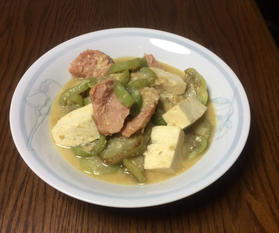 If the summer vegetable "goya" from Okinawa is considered the yokozuna of the East, then "naberā" would be the equivalent yokozuna of the West. "Naberā" is a dialect from Okinawa, which means "sponge gourd" in English. When preparing naberā, young fruits are used. The young naberā fruits are tender, with a delicate sweetness that is truly special. Additionally, naberā water is said to be a natural beauty elixir, so consuming it in its entirety may be beneficial for the skin.
This dish, known as "Naberā Dujiru Ni" or "Naberā Ni," involves first sautéing and then simmering. Peel the naberā and slice it into rounds about 1-2 cm thick (do not remove the seeds). The skin of naberā is unexpectedly tough, so peel it until the flesh turns white. Sauté the sliced naberā, pork, and tofu together. While it is a sautéed dish, the naberā releases moisture, resulting in a moist finish.
In my case, I use 7 parts sautéing and dissolve a bit of miso in a ladleful of dashi broth, pouring it in and covering it, then simmering on low heat. When the color of the naberā changes and it becomes tender, it's ready to serve.




 Mail
Mail