◎ Style Change:
◎ This post was translated from Japanese with translation software.
Citrus keraji var
2023.02.22
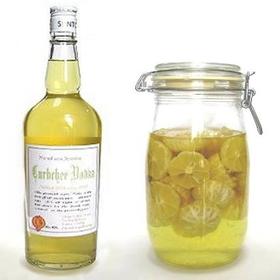 It is the season for Citrus, which are quickly bought and used to make fruit wine. 500 g kābūti (without the peel), 6 pieces of peel for flavouring, 100 g rock sugar, 720 ml vodka (Smirnoff 40°).
Vodka, a Scandinavian liquor, and kerbchi, a tropical fruit, are pickled in the hope that it will be a delicious combination. What concerns me a little is that the kābči is sweet and has little acidity. First, let's see how it progresses.
In Okinawa, carbuchi, a native Okinawan citrus fruit, is sold at markets, supermarkets and roadside stalls around October-November. They are harvested while the skin is still green and are about the size of a Onshu mandarin orange. According to one theory, they are called kabuchi because of their thick skin. It has a thick skin and a strong aroma, a rugged appearance, and has few seeds and little juice. However, it tastes sweeter and tastier than its strong aroma and appearance.
The aroma of the kābūti blends into the vodka and is intense. Citrus fruit wine's aroma weakens with time, so it might be better if this much aroma remains. The colour of the liquor is yellow with light greenish tints.
With time, it changes to an amber colour and the aroma of kābūti disappears, becoming the aroma characteristic of citrus fruit wine. Delicious, the kābūti aroma or faintly lingers after drinking. Bottled and labelled immediately.




 Mail
Mail