◎ Style Change:
◎ This post was translated from Japanese with translation software.
Chinnuku
2025.04.08
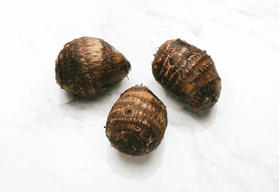 In the Okinawan dialect, taro (a perennial plant in the Araceae family) is called "Chinnuku." It is believed to have been introduced from southern regions and is valued as an auspicious food symbolizing prosperity and the flourishing of descendants, due to its abundance of small corms.
The main ways to prepare it include steaming, using it in simmered dishes, stir-fries, or as an ingredient in soups. A particularly well-known dish in Okinawa is "Chinnuku Juushi."
Chinnuku contains mucin, a slimy component that aids in the digestion and absorption of protein. Additionally, it is rich in diastase, an enzyme that breaks down starch, which makes it highly effective in promoting digestion, boosting vitality, preventing aging, improving skin health, aiding in recovery from fatigue, and alleviating constipation—offering various health benefits. (Sourced from online research)
The images displayed are borrowed from free distribution websites on the internet.
--- Translated with Copilot ----




 Mail
Mail