◎ Style Change:
◎ This post was translated from Japanese with translation software.
Goya N'bushi
2021.05.03
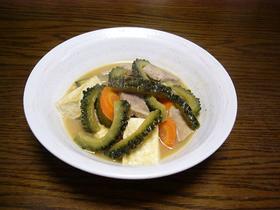 Bitter gourd is a vegetable that is perfect for preventing summer heat. Bitter gourd champuru is a well-known gourd dish, but we also recommend gourd bushi. Nbuushi is an Okinawan dish whose origin is "steamed". It is a cooking method in which ingredients with a high water content are cooked over low heat without adding much water, and includes not only bitter melon but also daikon radish, melon, and mbushi. Miso is often used for seasoning, but there are also soy sauce-flavored and salt-flavored mbushi.
Here I will explain the simple steps to make Goya N'bushi. Add the pork to a pot (a frying pan is convenient) and stir-fry. Once the fat from the pork has melted, add thickly sliced bitter gourd (about 1 cm) and stir-fry further. When the bitter gourd begins to heat up, add the stew made by dissolving red miso in the bonito and pork stock and simmer until the bitter gourd becomes soft. It's your preference, but in my case I add stir-fried tofu and carrots. The Goyanbushi in the photo is like that, but if you're tired of Champuru, how about N'bushi?


Nasibi N'bushi
2021.04.04
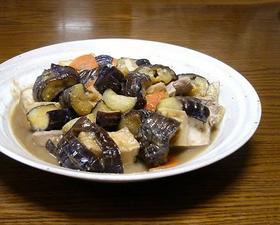 It is a dish called Nasibi (Eggplant dialect) Mbusi or Nasibi N'busi, which is eggplant stew in miso. Stir-fry eggplant, pork, and tofu, add miso dissolved in dashi stock, and simmer. I add sugar to make the miso a little less spicy. If you use lean pork, it will have a lighter flavor. Adding carrots, green beans, or broccoli for color makes it both visually appealing and delicious.
This time, I added deep-fried tofu and carrots for color (that's the only thing I had in stock, haha). Mbusi (or ubushi) is a dialect for a stew made with miso, which often uses ingredients such as shibui (winter melon), dekuni (radish), and papaya (green papaya).
Shibui N'bushi
2021.03.21
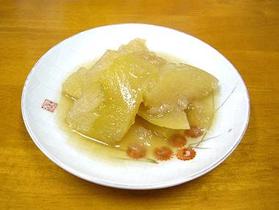 "Shibui N'bushi" (Shibui = winter melon) is a traditional Okinawan dish derived from the word "mushi," which means "steamed" in English. It is also known as Ubushi, Nmbushi, Ubsaa, Nbsaa, and the pronunciation may vary slightly depending on the region.
According to Wikipedia, "mushi" is pronounced as "umushi" or "nbumushi," and it transforms into "nbumushaa" or "nbumusaa" by adding "aa," which means "something that has been ○○ed." In terms of cooking technique, it refers to a method where ingredients with high water content are gently heated without adding much water. The most representative dish is "Naberanbushi," which involves steaming young loofah fruit with tofu. While miso is commonly used for seasoning, it does not necessarily imply a dish cooked exclusively with miso (there are also soy sauce and salt-flavored N'bushi).
The photo depicts Shibui N'bushi seasoned with soy sauce.
Naberā N'bushi
2021.02.21
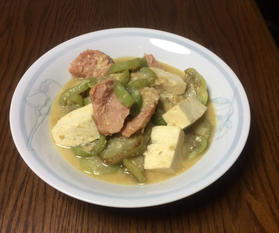 If the summer vegetable "goya" from Okinawa is considered the yokozuna of the East, then "naberā" would be the equivalent yokozuna of the West. "Naberā" is a dialect from Okinawa, which means "sponge gourd" in English. When preparing naberā, young fruits are used. The young naberā fruits are tender, with a delicate sweetness that is truly special. Additionally, naberā water is said to be a natural beauty elixir, so consuming it in its entirety may be beneficial for the skin.
This dish, known as "Naberā Dujiru Ni" or "Naberā Ni," involves first sautéing and then simmering. Peel the naberā and slice it into rounds about 1-2 cm thick (do not remove the seeds). The skin of naberā is unexpectedly tough, so peel it until the flesh turns white. Sauté the sliced naberā, pork, and tofu together. While it is a sautéed dish, the naberā releases moisture, resulting in a moist finish.
In my case, I use 7 parts sautéing and dissolve a bit of miso in a ladleful of dashi broth, pouring it in and covering it, then simmering on low heat. When the color of the naberā changes and it becomes tender, it's ready to serve.
Okinawa New Year dishes
2021.01.03
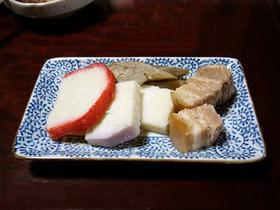 Yamanmu (mountain yam) and Suuchikaa (salted pork). This is a dish made by stir-frying steamed mountain yam with salted pork belly, and adding garlic or leeks. It was sold at the Uruma City Industrial Festival's food stalls, with leeks as the aromatic vegetable. When I asked for permission to take a photo, they kindly agreed.
In the old days, when it came to New Year's feasts, there was a dish that consisted of the blessings of nature - mountain yam and salted pork belly - stir-fried together. I've heard it was a staple dish for the common people.
Mamina Champuru
2020.12.26
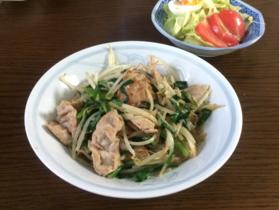 "Māmina Champuru" - In Okinawan dialect, "Māmina" means bean sprouts. Translated literally, it means "bean sprout stir-fry."
Considered a frugal ingredient due to its low cost, bean sprouts are stir-fried with pork and tofu in this dish. The seasoning consists of a bit of bonito broth and salted soy sauce, resulting in a simple and delicious vegetable stir-fry. Since bean sprouts alone might be a bit plain, adding green onions or leeks for color makes it even more delicious.
This time, I didn't have tofu on hand, so I added a bit more pork instead.
Tamana Champuru
2020.11.05
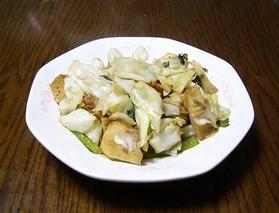 "Tamanaa Champuru" is the Okinawan dialect term for stir-fried cabbage. "Tamanaa" is a dialectal reading for "cabbage."
Cabbage belongs to the Brassicaceae family and is a biennial herbaceous plant. It is believed to have originated along the Mediterranean coast and was introduced to Japan after the Meiji era. It is likely that Okinawa also started consuming it as a vegetable around that time. Since it is a vegetable that requires cold weather, it is cultivated in Okinawa from autumn to spring, as there are no highlands in the region.
In Okinawa, one of the most representative cabbage dishes is Tamanaa Champuru. It's prepared by seasoning pork, tofu, bonito flakes, and soy sauce, then sprinkling green onions on top. This time, instead of pork, I used Satsuma Age (fish cake) and added mustard greens for color. You can also substitute canned pork for the meat, making it a delicious and easy-to-make dish.
Hu Champuru
2020.10.10
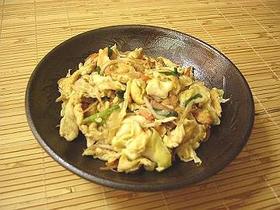 Okinawan stir-fry, also known as "Hu Champuru," is a dish made by stir-frying fu (wheat gluten) with various ingredients. Here's a simple cooking explanation: thinly slice soaked wheat gluten and squeeze out excess water. Coat the squeezed gluten with beaten egg and stir-fry it together with assorted vegetables. Season with salt, soy sauce, bonito dashi broth, or umami seasoning to taste.
Indeed, a simple dish made with eggs, wheat gluten, and assorted vegetables, yet it turns out to be incredibly delicious. Perhaps because of this dish, Okinawa might have a higher consumption of wheat gluten compared to other regions nationwide.
This time, I included plenty of ingredients like carrots, bean sprouts, cabbage, green onions, and canned pork. As a finishing touch, you can drizzle a bit of sesame oil for added fragrance according to your preference.
Somin Champuru
2020.09.06
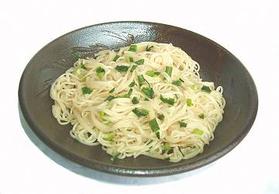 "Somin Champuru, Somin Tashiyaa, Somin Iriichi" - The various names depending on the region are evidence of how beloved this dish is. 'Somin' is an Okinawan dialect term, meaning somen noodles.
The preparation is quite simple: boil the white somen noodles, rinse them in cold water to firm them up, then stir-fry them in a frying pan. Season with bonito broth, salt, and soy sauce, and finish by sprinkling green onions on top. For a slightly more deluxe version, you can use canned sardines. The dish turns out even more delicious with older noodles.
The key points to be mindful of during cooking are the boiling time and the speed of stir-frying. While the cooking process is straightforward, if you're not careful, the somen can become too soft and sticky, turning into what is known as "Somin Putturu."
The appeal lies in its ease of preparation, making it a convenient choice for meals during typhoons or as a light snack at 3 o'clock. You can get creative with it by not only using green onions but also chopping cabbage, carrots, and other vegetables to give it a yakisoba-like flavor. In place of bonito broth, tuna from a can or corned beef hash are also recommended alternatives.
Goya Champuru
2020.08.22
 In summer fatigue, the slightly bitter taste stimulates the palate and stomach, increasing appetite. Recently, there have been advancements in breeding, reducing the bitterness.
 This time, I'm using the familiar canned pork as a substitute for pork. The ingredients include bitter melon, carrots, tofu, eggs, and Spam. They are seasoned with salt and soy sauce in bonito dashi broth, and flavored and garnished with sesame oil. This style is a staple in our household for Goya Champuru.
First, sauté the tofu and Spam in a frying pan, then set them aside. In the same pan, stir-fry the bitter melon and carrots. Add a little bonito dashi broth and let the flavors simmer. Then, add beaten eggs. Finally, return the tofu and Spam to the pan, stir-fry, and season with soy sauce and salt. Finish by drizzling a little sesame oil.
If you prefer to use pork belly slices, I use lard. At that time, I don't use sesame oil because I enjoy the fragrance of the cooked lard.


 Mail
Mail