◎ Style Change:
◎ This post was translated from Japanese with translation software.
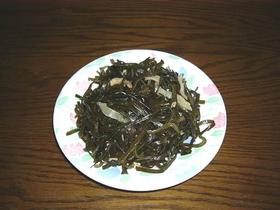 Kubuiriti is a dish that makes effective use of kombu (kelp) after making dashi (soup stock). Since kelp has become more readily available in recent years, it is used as it is rather than after the broth has been made, so the flavor is richer and the more you chew it, the more delicious it tastes.
Kubuiriti is an Okinawan dish of stir-fried kelp and pork. It is stir-fried with pork, a little konnyaku, salt, soy sauce, and a little sugar to taste. It is light and tasty because the kelp broth has been properly drained out.
According to a TV program.
It is said to be effective in preventing high blood pressure, lowering cholesterol levels, and regulating intestines.


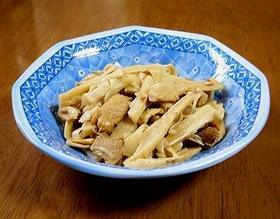 Suncy ili chi or Sunshi is an Okinawan dialect word for bamboo shoots, a familiar ingredient in ramen noodles. Sunshi ili chi is made by cutting bamboo shoots, pork tripe, sponge cake fish paste, and shiitake mushrooms into strips, simmering them in pork broth, and stir-frying them.
Sun shi ili chi is a dish served at New Year's and festive meals. In the old days, sun shi was imported from Taiwan and China and was a luxury ilichi.
When the oil begins to melt, add sun shi and shiitake mushrooms, then add pork broth (pork stock that has been boiled and the scum removed), and simmer. Use sake, sugar (or add more mirin), salt and soy sauce. When the water content is reduced, add the sponge cake fish paste and let it drain off. The finish should be moist, not dry. The crunchiness of the seasoned sunshi and the balance of the other ingredients is delicious.
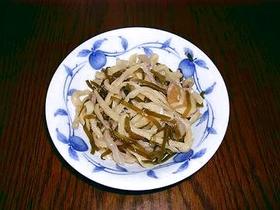 Stir-fried radish. Irichi is a dish that is stir-fried and then boiled down. Return the dried dried daikon radish and stir-fry the shredded kelp and konjac with the pork. It has a light taste and is delicious.
If you use dried radish instead of daikon radish, you can make dried radish. On a celebratory meal, one of the following is served in a small bowl: kubu ilichi, dekni irichi, or dried irichi.
Stir-fried daekuni (radish). Ilichee is a dish that is stir-fried and then further cooked down. Kiriboshi daikon (dried radish) is returned and stir-fried with shredded kombu (kelp) and konjak (konjak) with pork. It is light and tasty.
If dried dried dried gourd is used instead of daikon radish, it is called dried gourd iliçi. One of kubu irchee, daikuni irchee, or dried pyo irchee is served in a small bowl with the festive meal.
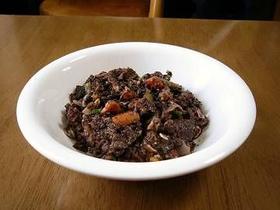 Chi-iri-chi is a pork dish that seems to be gradually disappearing from Okinawan cuisine. It's true that cooking is time-consuming and difficult, but one of the reasons is that pig's blood as an ingredient is not sold at local supermarkets.
Blood irichi is a stir-fried dish made with pig's blood (cow or goat's blood can also be used), and I heard that it was served during memorial services in the past. I also heard that it is made as a Lunar New Year dish. Of course, you can also cook it as a regular side dish. Stir-fry some pork innards, pork belly, carrots, and papaya or daikon radish. Once cooked, stir in the pork blood and add green onions and garlic leaves to add flavor.
It's a dish that you rarely see at delicatessen stores these days. Fortunately, the supermarket I use sells cooked chee iri chee in packs (the chee iri chee pictured), so I buy it from time to time and enjoy it. It's well-cooked and the seasoning is to my liking. If you love levanilla, you'll probably find this one to be one of your favorites.The rich flavor is unforgettable.
In countries with a long history of meat-eating, blood is also cooked as an important source of protein. Famous examples include blood sausage (pig blood, tongue, and fat) from Germany, Portugal, Korea (cow blood), China (cow, pig), and Mongolia (sheep blood). The dishes used seem to be from many regions around the world.
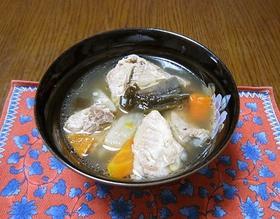 Bone-in ribs (spare ribs) are called soki in the Okinawan dialect. According to Wikipedia, ``soki'' is an accent of ``suki,'' and because pork ribs are shaped like a comb, pork ribs have also come to be called ``soki.'' It said.
Soki soup is made by simmering soki cut meat with bones, daikon radish (shibui is also good), and kelp. Add a little awamori to remove the smell of the meat, a little garlic, bonito stock, salt, and soy sauce to adjust the flavor.
It is a dynamic dish that is cooked slowly and slowly so that the bones can be easily removed from the meat, making it extremely delicious and perfect for maintaining stamina.
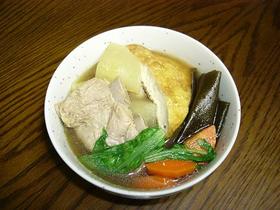
If you search the internet, you will find many ways to make soki soup, and they all look delicious. It takes a little time to simmer bone-in meat, so I think it's a good idea to use a pressure cooker.
When using a pressure cooker, there are various procedures available online. We recommend that you refer to the steps that seem to be easy to follow.
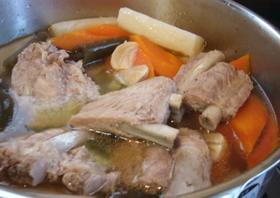
Traditional soki soup is basically made with soki, kelp, daikon radish, or shibui (winter melon), but at my house, soki soup has a lot of ingredients, such as daikon radish, kelp, fried tofu, potatoes, carrots, cabbage, and seasonal leafy vegetables. Enter. In short, it resets the inside of the refrigerator. Add root vegetables to water and leafy vegetables at the end of cooking.
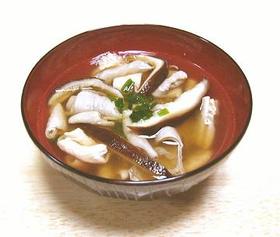 It is also called nakaminuushimun (soup with contents), nakaminushimun (suimono with contents), nakamijiru, or nakami for short. This elegant soup is made by boiling pig intestines and stomach until tender, then seasoning with pork and bonito stock, salt, and soy sauce, and using ginger as a seasoning.
A traditional Okinawan soup, it is still served at the end of Bon Festival, as a celebratory meal, and as a memorial service dish. Until a long time ago, it was difficult to prepare the contents, and it was not served on the table as a daily home-cooked meal, but in recent years, boiled food is sold in small portions at supermarkets, etc., and it is easy to make.
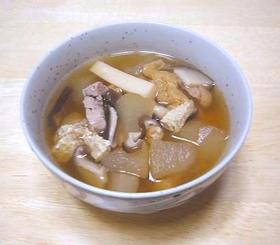 In the Okinawan dialect, deer imitations are called ``Shikamuduchi.'' It is said that this dish used deer meat in the past, but it is not certain. One theory is that the ingredients were similar to inamduchi (boar imitation), so it was called shikamuduchi to distinguish the dish. Of course, Shikamduchi also uses pork instead of venison.
Aside from the poop, the clear and light bonito-flavored Shibui soup is very delicious, and I think it's the perfect dish for summer in Okinawa. Depending on the region, it is served at celebrations and Obon festivals. It is a recommended dish not only for special occasions, but also for everyday meals if you can get your hands on it.
Shibui (winter melon) is an important ingredient in Shikamduchi, and in Okinawa it is said that Shibui has a diuretic effect on the kidneys, constipation, and quenches thirst. In Chinese medicine, it is said to have a cooling effect on the body and relieve fever, and the seeds are called winter melon kernels and are used as a diuretic.
Ingredients: pork belly, shibui (winter melon), dried shiitake mushrooms, kamaboko, fried tofu, pork stock, bonito stock, shiitake mushroom soup (optional). Cut the boiled pork belly, rehydrated dried shiitake mushrooms, drained fried tofu, kamaboko, and other ingredients into thin strips. Combine pork stock and bonito stock in a pot, heat, and when it comes to a boil, add all the ingredients and adjust the taste with salt and soy sauce. If you are concerned about pork fat, you can also make it delicious with less fatty red meat or loin meat. It is also a good idea to add shiitake mushroom juice to enhance the aroma and richness of the clear soup.
The trick to cooking is to turn off the heat once you've finished cooking and let it cool. At that time, the stock will soak into the winter melon, so warm it up again just before eating. Shibui (winter melon) is full of flavor and is delicious and good for your health.
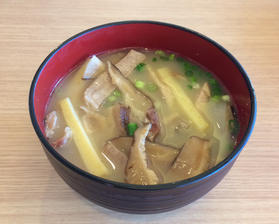 It is said that a long time ago, people substituted pork for wild boar dishes, which is why it came to be called inamduchi (boar imitation). It is also called ``Inamurchi'' depending on the region.
This is an Okinawan-style pork soup made with sweet white miso, and is a dish served at New Year's Day and other celebratory occasions. Of course, I also cook on normal days. It's my favorite dish.
The ingredients are boiled and drained pork belly, kamaboko (castella kamaboko is better), dried shiitake mushrooms, fried tofu (or thick-fried tofu), and konnyaku, all of which are cut into strips. Combine the pork/bonito stock, the shiitake mushroom stock, and dissolve the white miso. Add all the ingredients to it and bring to a boil.
Konnyaku is one of the ingredients used in inamduchi, and it is said that wheat gluten was used in the past. Adding flower gluten to the decoration will make it even more luxurious. Inamduchi soup and wheat gluten are also nicknamed delicious.
The picture uses kamaboko, but castella kamaboko is even more delicious. I didn't have any konjac on hand today, and I didn't have any flower gluten, so I tore up some kurumafu and added it.
My preference is to add white miso and simmer it for a while to make a sweet, dark miso and give it a slightly thicker texture.
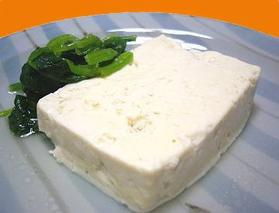 Boiled tofu is perfect as an instant side dish, or as an accompaniment to sake. It's Okinawan style boiled tofu. If you haven't tried it yet, it's easy to make, so give it a try.
Cut the tofu into pieces about half the size of tofu and spread them out in the pot. Pour enough water to cover the pot, add 2 tablespoons of salt (adjust depending on the size of the pot), 2 ladles of stock (adjust depending on the size of the pot), add a little salad oil, and cover with a lid. Put it on fire. Once it boils, immediately lower the heat and boil for about 2 minutes (depending on the amount of tofu) and it's done. Add seasonal leafy vegetables for garnish. When serving as an accompaniment to sake, pour a spoonful of the broth on top of the plate to add a salty taste.
To make it even easier, boil the tofu by adding salt, bonito flakes (seasoning), and salad oil from the beginning. Add seasonal leafy vegetables for garnish. To avoid staining the tofu with the vegetables, you can use a separate pot and lightly boil the tofu in the liquid from which the tofu is cooked. This time, I used boiled and frozen spinach.
This dish uses a little more salt, but since the broth is not used, I don't think it will add too much salt. Don't forget to use firm tofu (Shima Tofu) and salad oil.
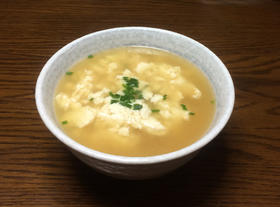 Yushi tofu is the soft tofu that is just before it is molded, and due to its soft and fuzzy appearance, it is also called oboro tofu.
When this is collected or pumped up and placed in a bowl, it is called yose-dofu, kumi-dofu, or tsumiage-dofu, and when it is placed in a colander, it is called zaru-dofu. Even though the process is the same, there are different names depending on the state, how it is taken out, and the container.
In Okinawa, it is called "Yushi tofu", and since Yushi tofu has a slightly salty taste, you can eat it as is to enjoy the natural taste of soybeans, or add bonito stock or use it as an ingredient in miso soup.It is the soul of Okinawa. It's one of the hoods.


 Mail
Mail