◎ Style Change:
◎ This post was translated from Japanese with translation software.
Salad with pork skin
2022.11.07
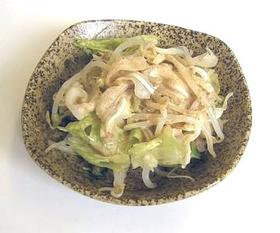 Mimigar (skin of pig's ear) is crunchy and delicious. Once you try it, you will become addicted to it. Mimigarh is made by boiling pork ears and slicing them thinly.
Mimigarh sashimi is made with lightly boiled bean sprouts and cucumbers with vinegared miso paste, or with peanut butter mixed with vinegar, sugar, myrin, and soup stock.
It is ideal as a snack with beer or sake. The crunchy texture is the cartilage of the pig's ear, which contains a lot of collagen and is considered a healthy food. It is not only used as an appetizer, but also as an ingredient in champuru dishes.
Pictured is a mimiga salad of boiled bean sprouts and lettuce with sesame dressing.


Radish Salad
2022.10.07
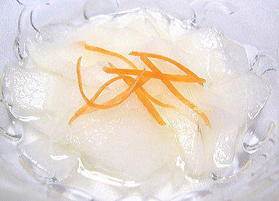 Vinegared daikon radish is called dekuninamashi in the Okinawan dialect. Daikon in season is thinly sliced with ama-zu (sweet vinegar) (the photo shows thinly sliced). The ama-zu is made by mixing vinegar, water (or light soup stock) and sugar.
It is slightly more acidic than usachi (see previous blog post). If you don't care about the color of the dekuninamashi, you can add a few drops of soy sauce. Rather than eating it immediately after making it, refrigerate it for a while so that the juice from the daikon and the sweet vinegar will meld together and give it a nice flavor.
You can use lemon or sequoar for flavoring if you like, but in my case, I don't, because it would ruin the flavor of the daikon. For garnish, shaved dried bonito shavings. In the photo, carrots are garnished.
mozuku (species of edible seaweed)
2022.09.20
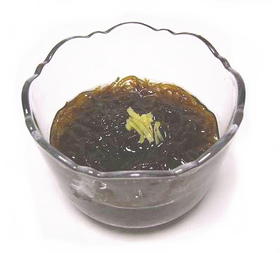 Mozuku is called "sunui" in the Okinawan dialect. The etymology of the word comes from the fact that it is eaten as a vinegared dish, and vinegar and nori are said to have come together to form the name of vinegared nui. (Nui means "laver.")
It is very similar to mozuku collected in the mainland, but they seem to differ in terms of subject and genus classification. The demand for mozuku increased due to the natural food boom, and mozuku cultivation was studied in Kagoshima and Okinawa, reaching its peak around 1980 in Okinawa.
Mozuku's well-balanced content of polysaccharides (dietary fiber), fucoidan, alginic acid, fucooligosaccharides, and other vitamins and minerals has attracted attention as a health food that helps prevent lifestyle-related diseases.
Sanbaizu is the most common way to eat mozuku as a vinegared dish. Many people have tried various ways of flavoring vinegar and condiments to their liking. Tempura is also a delicious way to eat mozuku other than as a vinegared dish.
Okinawan spinach
2022.08.04
 A perennial herb of the Asteraceae family that is believed to have been introduced to Japan from its native tropical Asia via China. Its Japanese name is "suizenji-shi", "kinjisusa", "shikibuso", "harutama", etc. It is also called "shikibu" in Japanese.
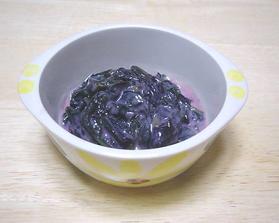
The photo shows handama dressed with vinegared miso. Boil 200 g of leaves, drain off the hot water, cool in cold water, and drain off the water. This is the same way to boil leafy greens.
For the vinegared miso, sweet white miso is recommended. The amount of vinegared miso is up to you. I use 2 tablespoons white miso, 1 tablespoon sugar, 1 teaspoon vinegar, and a little mirin to make it a little sweet.
Boiled handama are black in color, but the anthocyanin pigmentation from the vinegar adds to the color. When served over rice, the vinegar and miso mixture will give the rice a beautiful purple color. (Based on 4 servings)
Usachi
2022.07.16
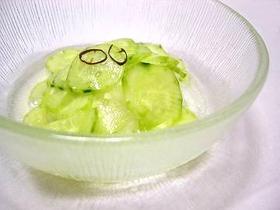 Vinegared cucumbers are a simple and easy to make dish. Thinly slice cucumbers. Then, pour the ama-zu (sweet vinegar), which is made by diluting vinegar with water and adding sugar and myrin, over the slices.
As one would expect, this alone is tasteless, so add a few drops of citrus juice (or lemon) to flavor the ama-tsuyu. In the picture, I put some chili peppers on top, but this is optional. I put it on for me to eat later.
Dilute the sweet vinegar so that you can drink the juice as is. If you make usachi and refrigerate it for a while, the water from the cucumber mixes with the sweet vinegar, making it refreshing and very tasty.
In the old days, when there was usachi at a festive meal, I drank all the juice, and was chided for my bad manners, but I couldn't resist the taste of usachi.
But the taste of usachi was so good that I couldn't resist... As an easy and tasty way. Dilute commercially available sushi vinegar with water, add a little sugar, and a few drops of lemon concentrate to make it homemade. It's completely lazy, but I recommend it as a dish that brings coolness to your summer table.
Tamaguburu
2022.06.03
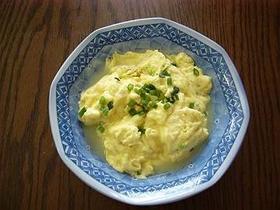 Tamaguburu, a dish of Okinawan home cooking, is made with eggs in the form of dough. It is the Okinawan version of scrambled eggs, made with beaten eggs, bonito broth, chives, a pinch of salt, and a little sesame oil for flavor.
You can add chopped nori (seaweed) or shichimi (seven spices) if you like. Chawanmushi requires a lot of time and effort, but this dish is very easy to prepare and is similar to scrambled eggs. Instead of milk used for scrambled eggs, Tamagou Blue uses dashi broth.
As a side note, it is recommended to use two eggs, although it can be done with one, but for a fluffier texture, use more than two eggs for a better taste.
Okinawan Cuisine & Cooking
2022.05.12
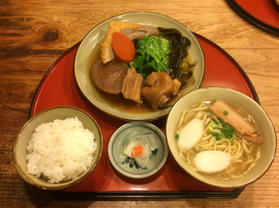 About the difference between Okinawan stir-fry dishes chanpuru, tashiya, and ili chi. According to various sources, it is correct to call it chianpuru unless it contains tofu and pork as stir-fry ingredients.
The term "chanpuru" is often used these days to refer to stir-fried food in general, but the correct way to distinguish between the two is to use tasiya when stir-frying starchy foods such as rice and somen noodles, while stir-frying ilichy is to use soup stock and boil down the broth slightly.
Nombushi is not a stir-fry dish, but is a stewed dish consisting of raw vegetables and other relatively moist ingredients, tofu, and pork, seasoned with miso paste.
It is a characteristic of Okinawan cuisine that the name of the dish is often given to the main ingredient and the method of cooking.
Papaya ili chi
2022.04.10
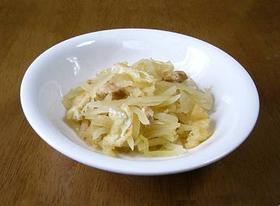 Papaya originates from subtropical Central America, Papiaceae, herbaceous evergreen fruit tree. In Okinawa, many families plant papaya in their gardens for both ornamental and practical use.
Papaya ili chi, or papaya ili chi, is made by stir-frying green papaya with pork. It is usually called papaya, but in Okinawa (the main island), papaya is the common name, so here it is called papaya iliçi. It is very tasty and has a firm texture.
To prepare papaya iliçi, peel green papayas, split them in two lengthwise and remove the seeds inside. Cut the fruits into strips and soak them in water for a while to drain off the bad smell. Boil pork chops and cut into strips.
Heat salad oil in a frying pan (or wok), add the pork, and when the fat from the meat has melted, add the shredded papaya. Add the dashi broth (pork broth or bonito broth), season with salt and soy sauce, and cook until all the liquid is absorbed. (Add a little fried tofu to the papaya ili chi in the photo (to keep the papaya crispy), and cook until all the broth is absorbed.
Papaya is eaten as a fruit, but the green, unripe fruit is used as a vegetable substitute. The unripe fruit contains vitamin C, calcium, and papain enzyme, which is very helpful in protein digestion and breakdown. Papayas are a good fruit tree because they produce fruit all year round, and papayas are large and bountiful when vegetables are scarce.
In the old days, papayas were said to improve milk supply because of their shape, and pregnant women were often fed them. It is a wonderful example of the wisdom of life that has been passed down from generation to generation.
Kubu ili chi
2022.03.10
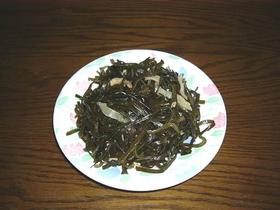 Kubuiriti is a dish that makes effective use of kombu (kelp) after making dashi (soup stock). Since kelp has become more readily available in recent years, it is used as it is rather than after the broth has been made, so the flavor is richer and the more you chew it, the more delicious it tastes.
Kubuiriti is an Okinawan dish of stir-fried kelp and pork. It is stir-fried with pork, a little konnyaku, salt, soy sauce, and a little sugar to taste. It is light and tasty because the kelp broth has been properly drained out.
According to a TV program.
It is said to be effective in preventing high blood pressure, lowering cholesterol levels, and regulating intestines.
Suncy ili chi
2022.02.26
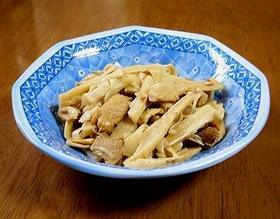 Suncy ili chi or Sunshi is an Okinawan dialect word for bamboo shoots, a familiar ingredient in ramen noodles. Sunshi ili chi is made by cutting bamboo shoots, pork tripe, sponge cake fish paste, and shiitake mushrooms into strips, simmering them in pork broth, and stir-frying them.
Sun shi ili chi is a dish served at New Year's and festive meals. In the old days, sun shi was imported from Taiwan and China and was a luxury ilichi.
When the oil begins to melt, add sun shi and shiitake mushrooms, then add pork broth (pork stock that has been boiled and the scum removed), and simmer. Use sake, sugar (or add more mirin), salt and soy sauce. When the water content is reduced, add the sponge cake fish paste and let it drain off. The finish should be moist, not dry. The crunchiness of the seasoned sunshi and the balance of the other ingredients is delicious.


 Mail
Mail